

Hermes Sandals Men Colorways Everyone Should Own
The strategic case for owning multiple Hermès sandal colorways
Owning more than one Hermès sandal colorway isn’t indulgence — it’s practical wardrobe engineering. Each colorway covers different outfit use-cases, from formal-casual transitions to high-summer looks, and the right mix multiplies the value of a single silhouette. Picking complementary neutrals, one signature pop, and an adaptable mid-tone gives you options for different fabrics, seasons, and levels of formality. This article lays out the specific colorways every man should own, why they matter, how they age, and how to wear them so you actually get daily use from a luxury purchase.
Hermès sandals are precise objects: leather type, edge finishing, and color finish change how they perform and how long they remain visually useful. Planning your collection around those variables prevents buyer’s remorse and keeps your wardrobe coherent. Below I’ll name the colorways I recommend, compare them, explain care and pairing, and flag mistakes most buyers make.
Which five Hermès sandal colorways should every man own?
Short answer: Black, Natural/Tan (Gold), Deep Brown, Navy, and Hermès Orange (or a restrained pop color). These five cover every practical need from dressier looks to bright-summer statements.
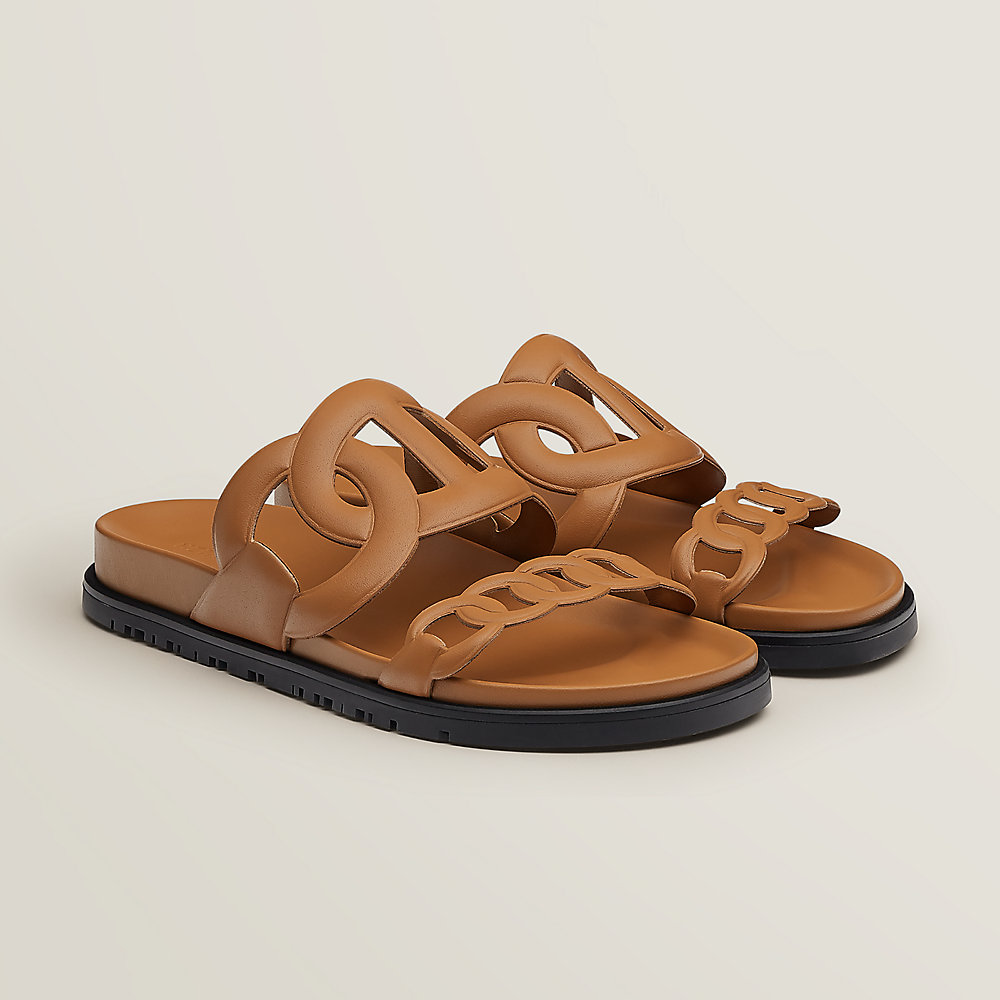
Black is the workhorse: it reads tidy with chinos, denim, and lightweight suiting, and hides scuffs better than lighter leathers. Natural/Tan (often listed as “Gold” or “Gold tan”) is the most versatile warm neutral; it patinas attractively and lifts linen trousers and olive chinos. Deep Brown gives a richer, fall-ready option that coordinates with leather belts and watch straps. Navy acts like a neutral with a cooler palette — essential when your wardrobe leans blue. A signature pop (Hermès Orange or a deep red) is optional but valuable: it communicates intentionality and elevates simple outfits.
Owning these five makes outfit decisions trivial: black + city, tan + summer linen, brown + leather accessories, navy + nautical or denim, pop color + minimalist capsule pieces. If you only want three, choose Black, Natural/Tan, and Navy for maximum coverage.
How do color and leather affect wear and aging?
Color and leather type determine how sandals age, how they should be maintained, and how tolerant they are of scuffs and salt. Dark, fully pigmented leathers like black resist visible marks; lighter and natural leathers show patina and marks but reward you with character.
Full-grain or box calf typically develops a subtle patina and softens with wear, while leathers with protective coatings resist staining but can show edge wear where hand-painted edges meet the sole. Vegetable-tanned and unfinished leathers darken with oils and sunlight; that’s desirable if you want a lived-in look but not if you want pristine appearance. Metal finishes or metallic leathers can flake if not cared for, and suede or nubuck colorways need different maintenance entirely.
For sandals, straps are especially exposed to sweat and sun; lighter straps may darken at the toe-post or between straps. Soles vary: leather soles dress up the sandal but scuff faster; rubber or crepe soles add grip and longevity. Factor these trade-offs into your color choice depending on whether you prioritize a clean look or an intentionally aged patina.
How should you pair each colorway with real outfits?
Pairing is simple if you think in three groups: city, summer-casual, and elevated-casual. Match color tone to outfit palette rather than matching exact items.
Black: wear with charcoal or navy trousers, cropped denim, or monochrome black looks. Black hermes sandals men work for evening events where bare ankles are acceptable and with lightweight suiting in summer. Natural/Tan: ideal with linen shirts, white or cream trousers, light-wash denim, and beige or olive chinos. Brown: pairs with tan belts, cognac leather goods, and fall layers; it looks intentional with olive or camel. Navy: bridges denim and tailored navy pieces; it’s subtle with patterned shirts and lighter trousers. Hermès Orange/pop: use sparingly to highlight minimalist outfits (white tee + navy shorts), not as a dominant element. The key is proportional contrast — let the sandal color echo a secondary accent in the outfit rather than compete with multiple bright elements.
Don’t force exact matches between shoe and belt; tonal family alignment is enough. For summer tailoring, choose slimmer, less structured suits and the darker or navy sandals. For true swim-to-street looks, favor rubber-soled options in tan or navy to avoid premature sole wear on pavement.
Quick comparison: colorway matrix
| Colorway | Why own it | Best outfits | Maintenance | Versatility (1–5) |
|---|---|---|---|---|
| Black | Most formal, hides marks | Charcoal suiting, dark denim | Wipe clean, edge touch-up annually | 5 |
| Natural / Tan | Warm neutral, patinas attractively | Linen, white trousers, summer denim | Condition leather, avoid salt; reapply edge dye if needed | 5 |
| Deep Brown | Rich, leather-accessory coordination | Chinos, leather belt ensembles | Condition, occasional polish | 4 |
| Navy | Neutral for cooler palettes | Denim, navy suiting, patterned shirts | Brush and leather conditioner | 4 |
| Hermès Orange / Pop | Statement, brand signature | Minimal outfits, resort wear | Wipe; avoid abrasive contact | 3 |
What’s the biggest mistake buyers make?
They choose a color because it looked cool in a photo, not because it fits their wardrobe strategy. The result is sandals that rarely leave the closet because they clash with what the buyer already owns. A second common mistake is underestimating how leather and color will age.
\”Expert tip: Buy for the wardrobe you have, not the one you want. If most of your trousers are navy, prioritize black and navy sandals over bright seasonal hues. Also, try them on with the socks-free outfits you’ll actually wear—fit and strap comfort change when ankles are bare,\” says a leather goods stylist with long experience fitting men’s sandals.
Fit matters as much as color. Leather straps compress; soles vary. Try indoors on the same surface you’ll wear them on, and walk across different textures to test grip and strap bite. If buying online, cross-check return policies and photos of the same colorway on different skin tones to judge contrast and how it reads in sunlight.
Little-known but verified facts about Hermès sandals and color
1) The iconic Hermès orange box became the standard in 1945 due to wartime paper shortages and has since become an enduring brand identifier.
2) Hermès names and catalogs use specific French color names; the same English label can cover multiple subtle shades produced across seasons.
3) Many Hermès leather articles are finished by hand — edge painting and stitching are often done by artisans, so small variations between pairs are normal and expected.
4) Seasonal colorways are limited; what appears in a given year may not return, which is why classic neutrals are the safest foundational buys.
Final layout: how to build the optimal five-color Hermès sandal rotation
Start with Black and Natural/Tan as your foundation — these two alone cover most outfits and occasions. Add Navy if your wardrobe leans blue, or Deep Brown if you wear more leather and earth tones. Finish with a pop color only when the first three are working in rotation. Rotate them seasonally to even out wear: give the lighter leathers a break in wet months and reserve darker pairs for evening urban use.
Pay attention to sole type and leather finish when purchasing; the wrong combo can shorten a sandal’s useful life. Care is straightforward: clean, condition, and store away from direct sunlight. With a strategic five-color approach you won’t own sandals that sit unused — you will own tools that make daily dressing easier and genuinely more stylish.
